Alphabet Shark Attack Game: A Fun and Engaging Way to Learn the Alphabet
Learning the alphabet doesn’t have to be boring or repetitive. The Alphabet Shark Attack Game offers a refreshing, playful approach to mastering both uppercase and lowercase letters, along with their corresponding sounds. Designed for young learners, this game is more than just entertainment—it’s an educational tool that supports early literacy development in a way that feels like play.
With its colorful design and interactive format, the Alphabet Shark Attack Game includes 11 pages of easy-to-print materials, complete with clear instructions for setup and gameplay. Each card measures approximately 6.5cm x 10cm, making them easy to handle for small hands and ideal for use in a variety of learning environments, from classrooms to home learning centers.
How the Alphabet Shark Attack Game Works
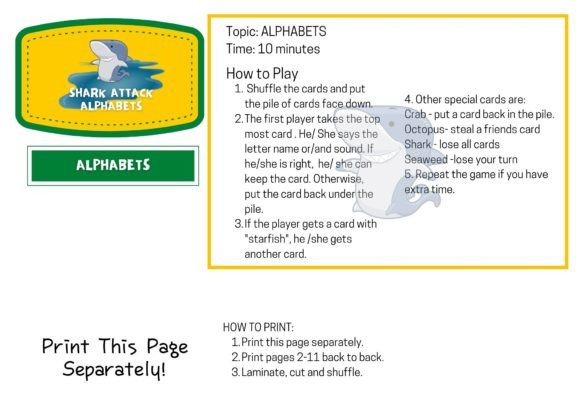
The core concept of the game is simple yet effective. Players take turns drawing cards that feature uppercase or lowercase letters. Some cards include “shark attack” images, which introduce an element of surprise and excitement. If a player draws a shark card, they must return all their collected cards to the pile—adding a layer of strategy and anticipation.
- Each letter card encourages recognition of both uppercase and lowercase forms
- Players practice letter sounds as part of the gameplay
- Shark cards introduce a fun, unpredictable twist
This format keeps children engaged while reinforcing key literacy skills. The game can be played solo or with a small group, making it versatile for different settings such as homeschooling, kindergarten classrooms, or even rainy-day activities at home.
Using the Game as Flashcards
Beyond gameplay, the cards can be used as flashcards to support memorization and quick recall. Flashcards are a proven method for reinforcing learning, especially in early childhood education. Because the Alphabet Shark Attack Game includes both uppercase and lowercase letters, it provides a comprehensive tool for mastering letter recognition.
Here are a few ways to use the cards outside of the game:
- Hold up a card and ask the child to say the letter name and sound
- Ask the child to find the matching uppercase or lowercase pair
- Use them during phonics lessons to reinforce letter-sound relationships
The compact size of each card makes them easy to store and transport, and since they’re printable, you can make multiple sets for different learning stations or siblings.
Why the Alphabet Shark Attack Game Works for Early Learners
Young children thrive on repetition, but traditional drills can become tedious. The Alphabet Shark Attack Game introduces repetition in a way that feels new and exciting every time. The element of chance with the shark cards keeps the game unpredictable and engaging, which helps maintain attention and motivation.
Additionally, the game promotes several important developmental skills:
- Letter recognition – Identifying uppercase and lowercase letters
- Phonemic awareness – Understanding the sounds each letter makes
- Social interaction – Taking turns, sharing, and playing cooperatively
- Memory and focus – Remembering which cards have been played and keeping track of matches
Because it’s print-and-play, there’s no need for expensive materials or complicated setup. This makes it an accessible resource for educators and parents alike, especially those working with limited budgets or time.
Integrating the Game into Learning Routines
One of the strengths of the Alphabet Shark Attack Game is its flexibility. It can easily be integrated into various learning routines and environments:
- Classroom centers: Set up a literacy station with the game for independent or small group play.
- Parent-child learning time: Use it during reading sessions at home to reinforce letter knowledge.
- After-school review: Help children retain what they’ve learned in school through playful reinforcement.
- Therapy tools: Speech and occupational therapists can use the game to support language development and fine motor skills.
Its adaptability also allows for modifications based on a child’s age or skill level. For example, younger children might focus only on uppercase letters, while older preschoolers can work on matching both uppercase and lowercase forms or identifying sounds.
Practical Benefits and Considerations
When choosing educational tools for young learners, practicality is key. The Alphabet Shark Attack Game offers several advantages that make it stand out:
- Cost-effective: Once printed, the game can be used repeatedly without additional cost.
- Durable: Laminating the cards ensures they can withstand frequent use and handling.
- Customizable: You can print multiple copies or add your own variations to suit specific learning goals.
- Low prep: No complex assembly or materials needed—just print, cut, and play.
For educators, this game is a valuable addition to a toolkit of literacy resources. For parents, it’s a way to support learning without screen time or pressure. And for children, it’s simply a fun activity that helps them learn without realizing it.
Final Thoughts on the Alphabet Shark Attack Game
In a world where digital learning tools are increasingly common, the Alphabet Shark Attack Game reminds us of the power of tactile, hands-on play. It bridges the gap between learning and fun, offering a dynamic way to reinforce essential literacy skills. Whether used as a game or as flashcards, this resource supports early learners in a way that’s both effective and enjoyable.
Its combination of simplicity, adaptability, and educational value makes it a standout choice for anyone teaching the alphabet. If you’re looking for a creative, engaging, and practical way to help children master letter recognition and sounds, the Alphabet Shark Attack Game is definitely worth considering.